
- cross-posted to:
- world@lemmy.world
- humanrights@lemmy.sdf.org
Opinion piece by Li Qiang, founder and executive director of China Labor Watch, and a human rights advocate with over 30 years of experience investigating global supply chains.
[…]
China’s low rights model is no longer a domestic labor issue but a systemic challenge to global labor standards, supply chain governance, and fair market competition. Without a coordinated civil society response, the global baseline for worker rights will continue to fall.
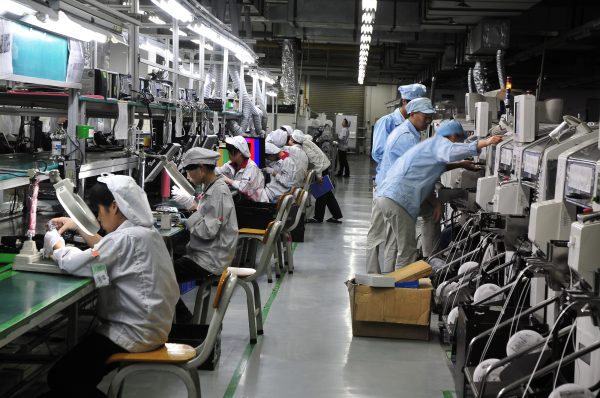
I call China’s economic model a “low rights” one because it has long relied on suppressing labor costs to maintain industrial competitiveness. As a result, trade imbalances between China, the United States, and Europe are strategically linked to China’s ability to attract multinational companies through low-cost labor and policy incentives. At the same time, Chinese companies internalized the technology and management know-how of these foreign companies into their domestic systems, gradually transforming what were originally Western competitive advantages into China’s own strengths.
[…]
In recent years, China’s “low-standard, low-cost” development model has expanded beyond its borders. Through the Belt and Road Initiative, it has spread globally, exporting labor, environmental, and governance risks to host countries. Nowhere is this more evident than in Indonesia’s nickel sector, where mining and smelting contracts are so short that they function like countdown clocks, pressuring companies to recoup capital as fast as possible.
[…]
This “low-cost” model has been permitted to exist due to an increasingly shrinking civic space. Independent labor monitoring inside China has become dramatically harder in the past decade. Today, only a few independent organizations remain capable of conducting investigations, such as China Labor Watch. Yet, political risks deter most international funders from supporting work inside China, leaving independent oversight critically under-resourced in an area where it is needed most.
[…]
To counter this dynamic, civil society organizations must be central to any strategy for raising global labor standards. We can advance change in three key ways.
First, increase public awareness. We can collectively highlight that consumers must recognize the real costs behind low-priced products: long working hours, low pay, job displacement, low labor standards. The public must understand that declining labor standards ultimately harm every society. In reality, with wages stagnating in many Western countries, more consumers rely on cheaper products that are produced by workers who are, in fact, competing with them for similar types of jobs in the global labor market.
Second, advocate and partner with authorities for the rigorous enforcement of forced-labor laws. Import bans, labor regulations, and due diligence laws already exist. But enforcement depends on independent organizations holding authorities accountable, and providing evidence if there are enforcement gaps. It also requires sufficient and sustained funding to ensure that these laws can be implemented in practice, rather than remaining symbolic commitments.
[…]
The EU Forced Labor Regulation and the Corporate Sustainability Due Diligence Directive (CSDDD) had their scope narrowed during the legislative process, while U.S. forced labor import enforcement remains inconsistent and lacks clear direction, making the global regulatory landscape by significant uncertainty. If global civil society does not intervene now, global labor standards will not simply stagnate; they will be redefined downward by a model built on speed, opacity, and the suppression of rights.
[…]
Settler workers rights and cushy conditions are built upon exploitation, enslavement and environmental destruction, and now youre falling for this we must liberate the those poor wretches bullshit
this isnt about the environment or poor workers, this is about mineral wealth that you feel entitles to
china is not your enemy, imperialism is, china is not imperialist
https://mronline.org/2025/06/05/is-china-finally-breaking-the-u-s-stranglehold/