People today like to make fun of the electricity scare of the 19th century:
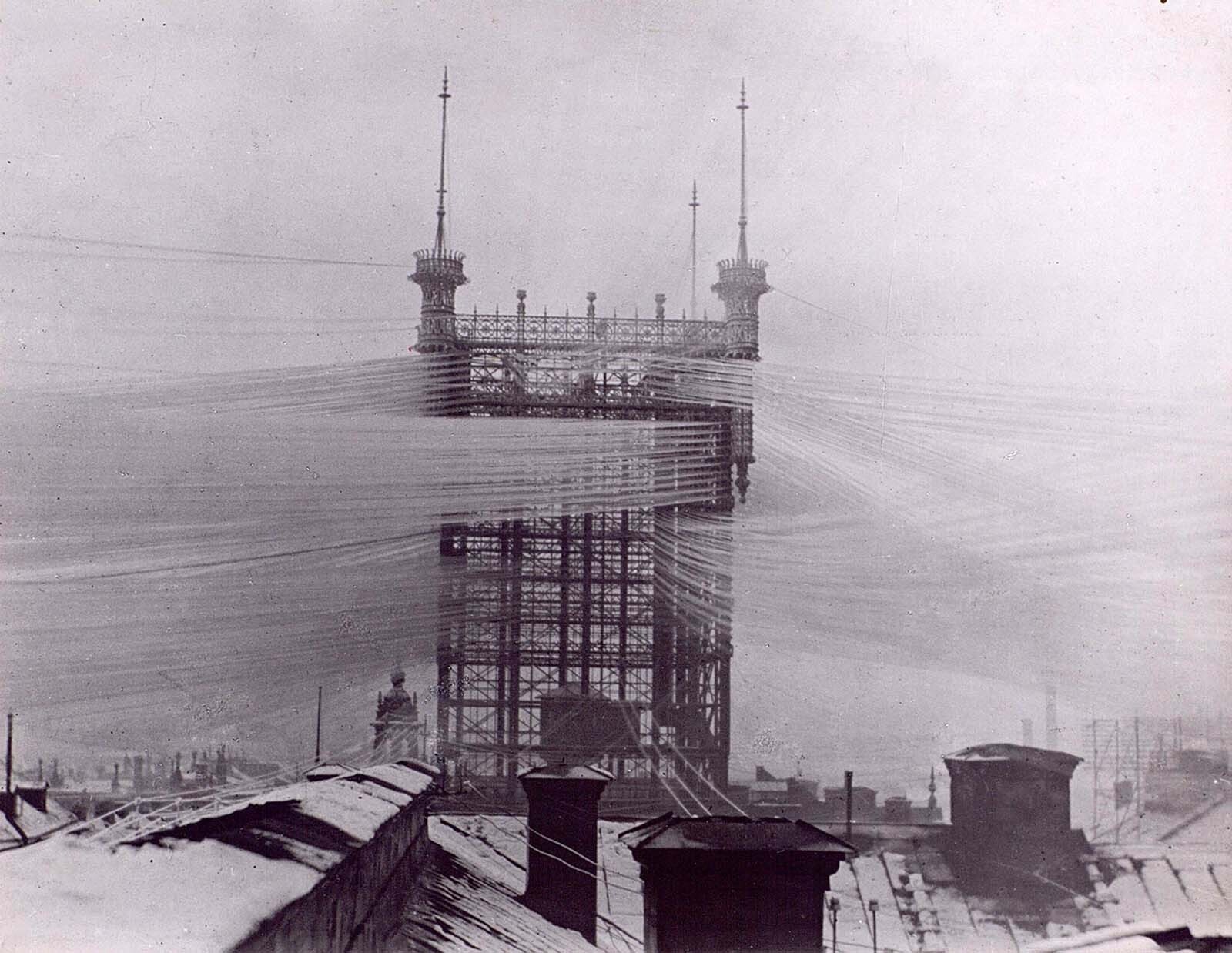
But I can’t really blame them. Most people today don’t know how electricity really works, and then imagine this shit looming over head; every day. Feels like Gordon Freeman watching the Citadel; powered only by T-Mobile…which is hardly an improvement over the Combine.
Apparently this cartoon was made a couple weeks after a specific electrical accident.
First of all, I never caught that electricity is a spider.
Note: Cover. Anti-electricity cartoon. Electricity is portrayed as a spider with a cobweb of electrical wires for trapping its human victims.
On October 11, 1889 John Feeks, a Western Union lineman, was high up in the tangle of overhead electrical wires working on what were supposed to be low-voltage telegraph lines in a busy Manhattan district. As the lunchtime crowd below looked on he grabbed a nearby line that, unknown to him, had been shorted many blocks away with a high-voltage AC line. The jolt entered through his bare right hand and exited his left steel studded climbing boot. Feeks was killed almost instantly, his body falling into the tangle of wire, sparking, burning, and smoldering for the better part of an hour while a horrified crowd of thousands gathered below.

People today like to make fun of the electricity scare of the 19th century:
But I can’t really blame them. Most people today don’t know how electricity really works, and then imagine this shit looming over head; every day. Feels like Gordon Freeman watching the Citadel; powered only by T-Mobile…which is hardly an improvement over the Combine.
Apparently this cartoon was made a couple weeks after a specific electrical accident.
First of all, I never caught that electricity is a spider.
Notes from Ohio State University library.