

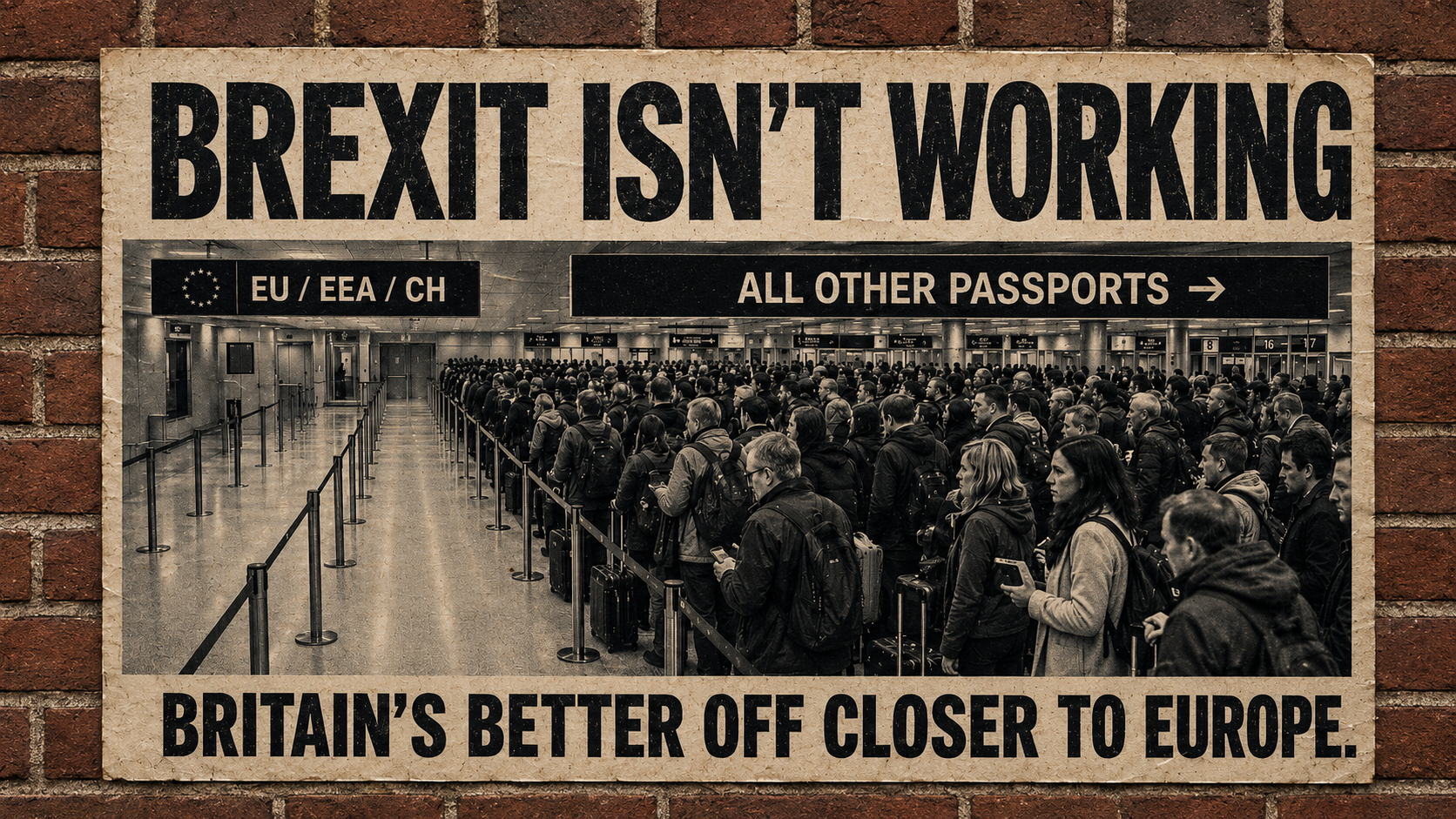
- New ECFR [European Council on Foreign Relations] polling shows British voters see Brexit as a disaster. They are strikingly open to reintegration with the EU. Three quarters want a closer relationship.
- They see that as key to improvements on the economy, security and migration. Old red lines are falling away, with a majority open to freedom of movement and even a European nuclear deterrent.
- Brits much prefer EU states and even the EU itself over the US, sentiments that are reciprocated within the union.
- Leaving the 2016 politics of “leavers” and “remainers” far behind, they are now split into “Optimists” (for confident reintegration), “Realists” (for negotiated closer relations) and “Loners” (for continued distance).
- Politicians must build a broad consensus on UK-EU relations reflecting the Britain of 2026 rather than that of 2016.
…
The Brexit divide may have represented an earthquake in British politics a decade ago, and even a useful category in the 2017 and 2019 general elections, but with each passing year it is becoming less relevant as new experiences and debates reconfigure an electorate that is itself evolving over time. Talk of “leavers” and “remainers” is on the way to resembling that of Roundheads and Cavaliers in the English Civil War, or of supporters and opponents of the 19th-century Corn Laws; the relic of a long-past historical clash rather than a guide to future political behaviour.
…
British voters of all political hues have left the old leaver-remainer rift behind. They may well be divided on many other things, as the country’s party-political fragmentation suggests, but on the future of UK-EU relations there is a lot of common ground. Therein lies a chance to leave the old polarisation of the 2016 era behind. The referendum ten years ago sometimes seemed to turn colleagues, families, even places against themselves and each other (the BBC’s flagship documentary on the anniversary is called “Brexit: A Very British Civil War”). Today’s picture is actually more promising: more pro-European, yes, but also a more nuanced patchwork of opinion with a lot of common ground concerning the threats facing the country.
…
As an addition:
Ten years on, Brexit’s economic impact is becoming clearer