- 23 Posts
- 45 Comments
Joined 3 months ago
Cake day: January 27th, 2026
You are not logged in. If you use a Fediverse account that is able to follow users, you can follow this user.

 14·16 hours ago
Closest to zero doesn’t belong to me to be honest :)
I don’t remember the exact numbers, but mine was something around 0:00:8# while comradepupivy was around 0:00:3#
Otherwise, great game. Can’t wait for season 4
Ca-Caw
 15·1 day ago
The article actually gives 3 options:
The only ways to make the deletion stick are to disable Chrome’s AI features through chrome://flags or enterprise policy tooling that home users do not generally have, or to uninstall Chrome entirely
- It can probably be reverted at their whim at any time
- You probably don’t have access to it
- It is the most realistic option, just use another non chromium browser



 3·2 days ago
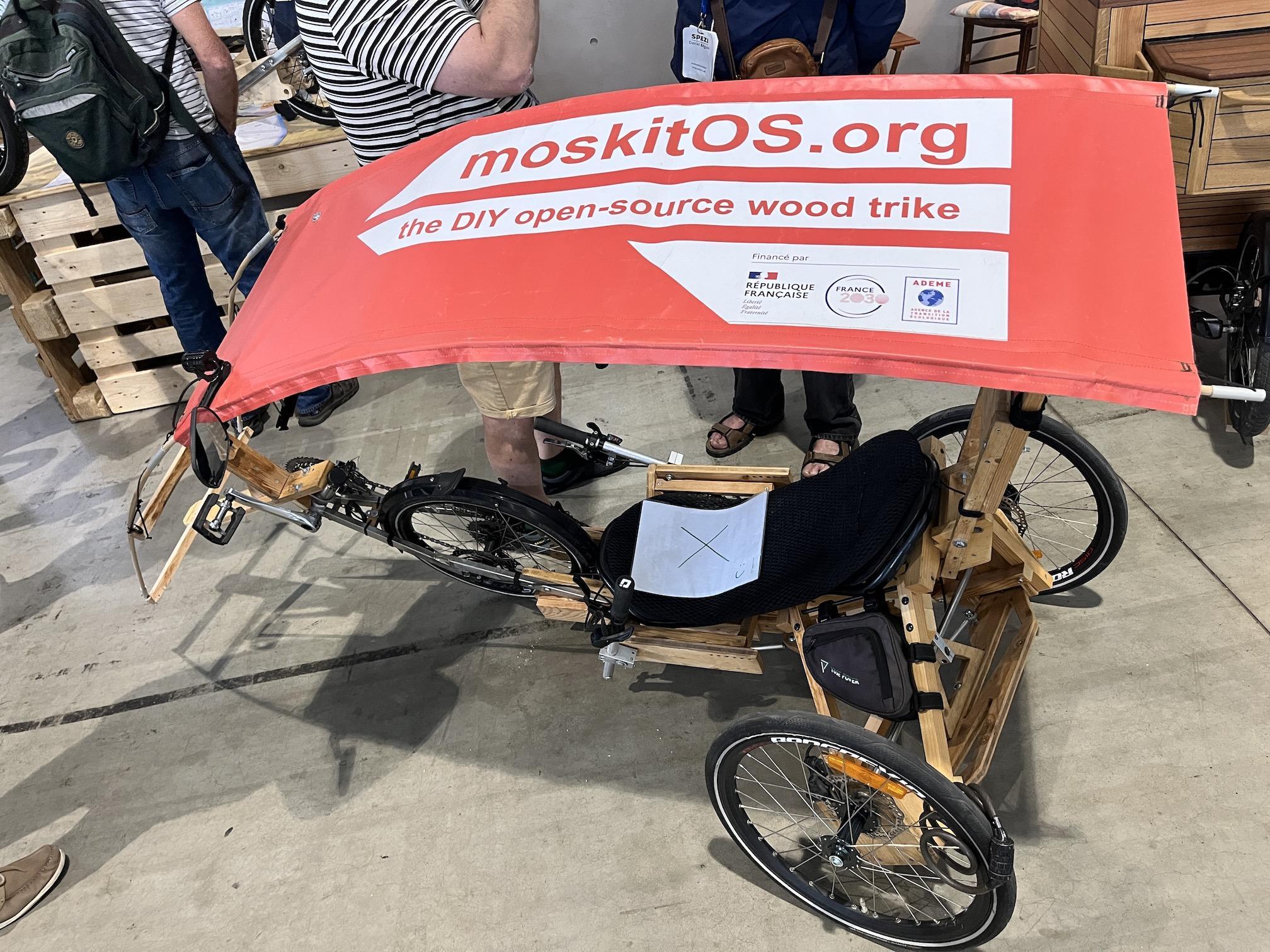
I don’t know where those numbers came from, tbh. A year ago they had some CNC wood kits that cost € 170
No longer available 😭
I think catbox.moe/ is a more permanent solution these days

 1·3 days ago
deleted by creator
Why do our hospitals look so bleak? We could have greener hospitals like Khoo Teck Puat or Ng Teng Fong, both in Singapore
Khoo Teck Puat hospital as an example:
Designed to be ‘forest-like’, water features with aquatic species, and plants that attract birds and butterflies were introduced. Greenery extended from the central courtyard to upper levels of the buildings and down into the open-to-sky basement, creating the impression of architecture deeply enmeshed in a garden. At the upper levels, balconies with scented plants bring the experience to the patient’s bedside.
Total surface area of horizontal and vertical greenery is almost four times the size of the land that the hospital sits on. In addition, 18% of the hospital’s floor area account for blue-green spaces and 40% of all such spaces are publicly accessible
[…] Common areas such as the main lobby and public corridors were specially designed for optimal natural ventilation thereby reducing the need for mechanical ventilation and energy consumption. By orientating the subsidized ward tower to ‘capture’ the prevailing North and South East winds, an optimal wind speed is achieved which would provide adequate thermal comfort for the patients.
[…] It is also a serves as a tranquil communal node where the local community can attend public lectures, exhibitions or participate in educational programs organized by the hospital.²
The energy-efficient design reduces energy costs by 50% and provides 40% of the floor area with the potential for natural ventilation.³
Video format about it for those that prefer it:
https://inv.nadeko.net/watch?v=Jw1b_SviPyU&t=275s
https://www.youtube.com/watch?v=Jw1b_SviPyU&t=275sYou probably won’t be able to redesign/retrofit everything, but perhaps just a little bit more green instead of only concrete?



 2·6 days ago
Sounds cool, come and share with us some of your !foraging@slrpnk.net
 1·6 days ago
whatś HA? as in “HA magic”
 2·7 days ago
Yeah, it might be a good idea to check if the downspout isn’t partially clogged. I don’t know how high that building is, but around here, leaves can get in there every once in a while
If you haven’t checked yet, you might also want to see the abutment flashing (see #7 below) where that wall and roof meet, as water might be percolating in that area and getting trapped between the ceiling/drywall/insulation.

I’d also check the other flashings as well while you are at it and if that drywall and insulation on that affected area are damp, remove them for venting
I can’t tell too much from the pictures, nor feel and test the wood. You mentioned the plaster was soft, but what about the wood? Are there mycelium growth in it?
Check if the wood is dark, mushy, deformed, poke test it with a knife/awl/screwdriver, as wood with advanced decay will be soft and the probe will penetrate easily. How far does it go? How big is the beam? Do you know what kind of wood is it? Test in multiple areas
Tear up a more of the plaster to check how the rest of the beam looks like and test them. If it is less than 0.3 cm, venting might be enough
Another one is the pick test, where you insert the knife beneath the wood grain to pry loose a thin section of it till it breaks free. If you get a long linear splinter, itś most likely good, if it comes out as crumbly chunks or short pieces with a mushy sound, it is not ideal.
If you are in a dry season and no rain in sight, I’d clean both inside and outside areas to let them vent. Get a fan/dehumidifier/open windows in that room.
I also prefer breathable buildings, so you could use a more traditional breathable plaster, which allows water to easily evaporate over time, whereas concrete and all the PVA might help trap the moisture. It is typically made from lime and/or clay, sand, and water. You can also add fibers (horse hair or plant fibers) for strength
Are you sure all that humidity is coming from the outside? It looks like a really weird spot for that to happen
Why can’t you access the upper floor? Is this an apartment building and someone else lives above you? What’s in the black tube?
Perhaps you have already checked, but I’d try to rule out any infiltration coming from above, otherwise it will keep happening and it could get worse. If someone lives above you, they might actually be liable for these repairs depending on the laws of your country
I’m no specialist, but I’ll give my two cents. Anyone feel free to correct me if I’m wrong or a better approach is available
-
Yes, even galvanized steel will eventually rust when directly in contact with the ground and it was accelerated by the salty air from the coastal region. It also rusts faster in high humidity air/soil. Even after sealing the roof, it will rust again from capillary humidity from the soil if laid directly against it
-
Concrete or rock footing around 10-20cm above ground level is what I usually see, make sure the water drains and it isn’t pooling between footing and post. Those stirrups are usually galvanized steel, but if your post is already galvanized steel, I guess it wouldn’t make sense in your case
-
Based on the first image, if you were to use a concrete footing above ground, you might even be able to salvage this post, as the two screw holes look unrusted on the picture, and they seem to be around the level you’d need to cut. You might need to grind down the area and look on the inside to confirm it. If it is, you won’t even need new brackets
Otherwise, yes, a local shop will probably have some 90° brackets and bolts too. Keep in mind to accommodate the requirements for hurricane/flood/frost if your region is prone to it
-
 1·14 days ago
You can’t say that and let us curious, which one in particular? I just started watching it and I got hooked. Looking forward to reading theories once I finish my binge watch
how it handles the load exceeding capacity
As in what happens if you plug too much stuff that it exceeds your solar production?
I’ll use mine as an example, but it might be different with different models and configurations:
Inverter can handle up to 10kw
If solar production is at 5kw, and home is demanding 7kw, in my case, I have it set up as to draw the remaining 2kw from the battery, if battery is depleted, it will draw 2kw from the utility companyIf home demands more than 10kw that the inverter can handle, it will trip the internal inverter protection or a circuit breaker leading to it
We already have hybrid inverters that does that automatically, you don’t even need a different circuit or special outlets. It can manage all the grid ties, off grid and battery parameters on the fly
Subscribe! That would be quite interesting to follow along in future updates, if you don’t mind sharing
Unfortunately they usually do it on farmland around here, when they could easily go the agrivoltaics route. They would only need to raise it a meter or two and let the sheep roam around doing the trimming for them
Depending on location, it would have been cheaper to have those posts raised/reinforced in the first place instead of buying and hauling all that gravel
This one actually grinds my gears and it is too popular around here:

But the other stuff is nasty. Total of petrochemicals in a tyre is above 60%. That fabric, carbon black, oils, elastometers, textiles, antioxidantes and additives are all based on petroleum too













Oh yeah, the puzzle, I wonder what they looked like and their solutions. I couldn’t get past the first one lol